
Fika, Illustrated: What Sweden Taught Me About Slowing Down and Enjoying the Pastries
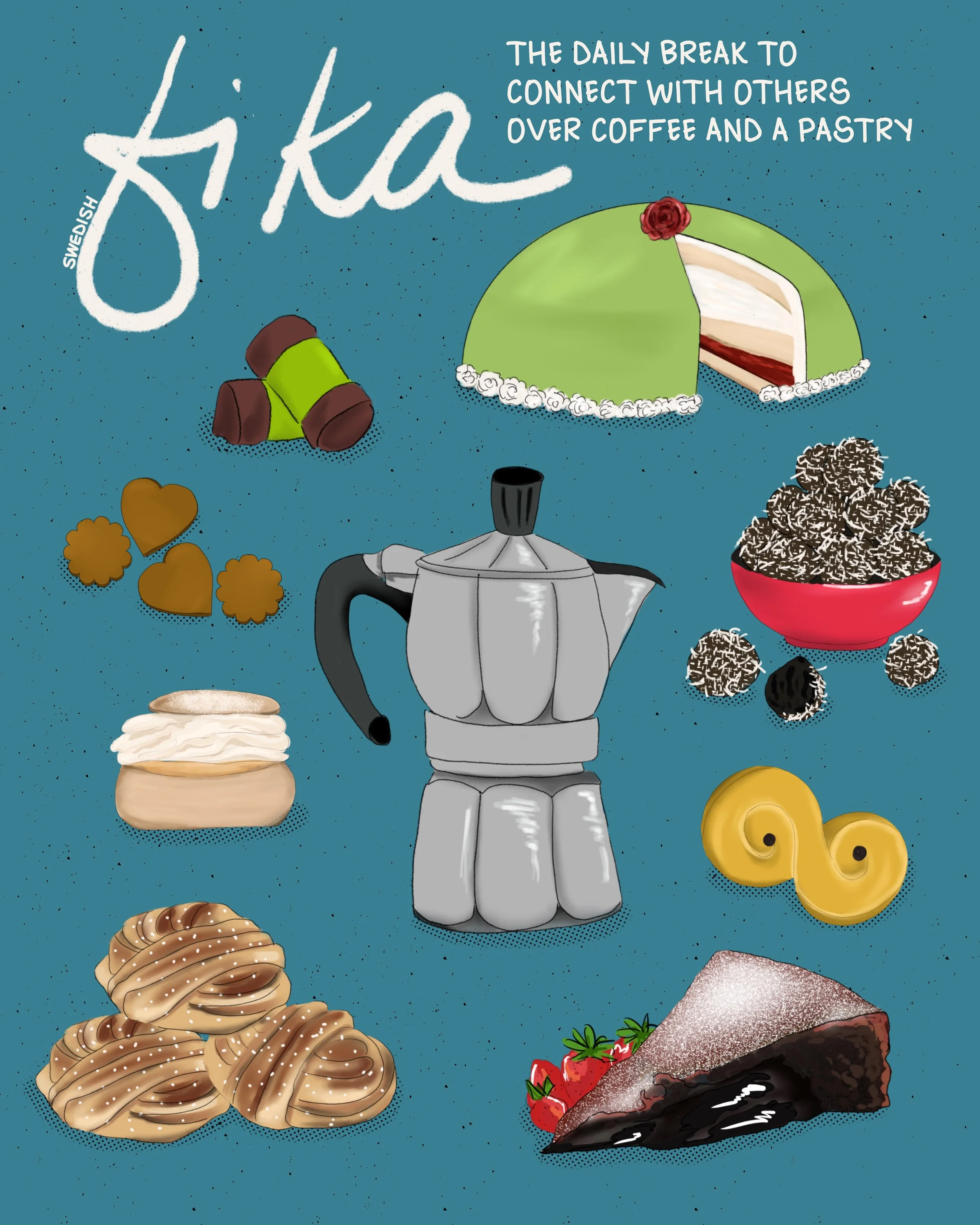
What is Fika?
I moved to Sweden not really knowing what fika was. I'd heard the word, it was the name of the cafe at the Swedish Institute in Minneapolis, but I thought it was just Swedish for coffee break.
Boy was I wrong about that! It is so much more than a coffee break. It’s something Swedes embrace on a whole different level.
Fika is not a coffee break. It's the daily, almost sacred practice of stopping what you're doing and actually being present with the people around you — over coffee, over a pastry, without an agenda. It's embedded in how Swedes work, how they socialize, how they structure a day. At work, fika is protected time - people will not schedule over it. Families have fika. Friends meet for fika the way Americans meet for lunch.
Fika is my preferred way to meet friends. The smell of kanelbullar drifting out of a bakery on a Tuesday morning. A tray of chokladbollar at a friend's kitchen table. A princess torte sliced and waiting on a cake stand at a birthday fika that somehow lasted three hours and nobody seemed to mind.
With such a beloved tradition, I needed to capture it in illustration.
About The Collection
The Fika Collection
This collection is a series of eight illustrated prints, each centered on a classic Swedish pastry or sweet — paired with the coffee, tea, or context that makes it feel right. Every piece has its own color story, its own mood, its own little personality.
Together they read as a love letter to the ritual. Individually, they hold up as prints. And on a tea towel or a set of cocktail napkins? Even better.
Explore the collection
Kanelbullar
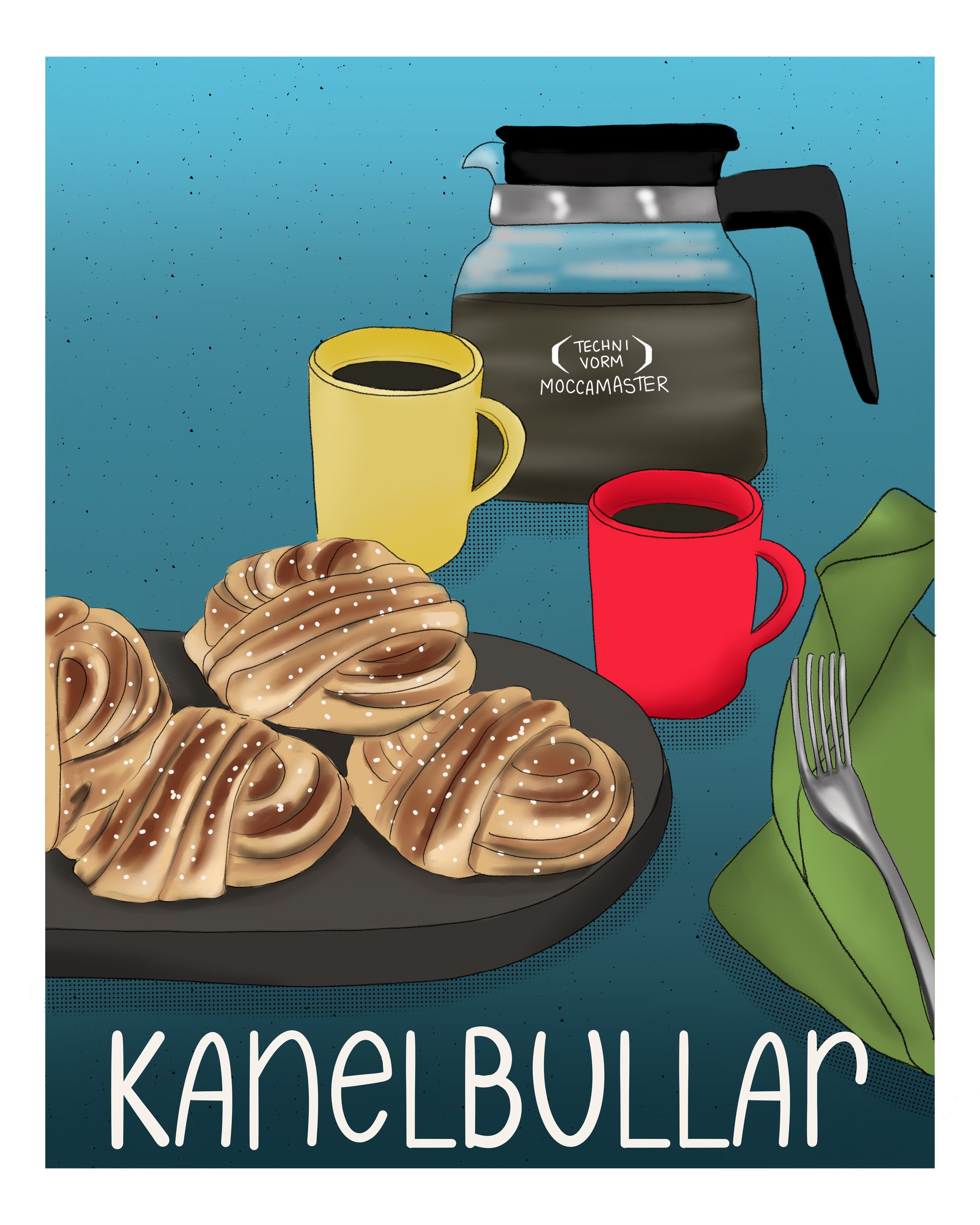
The cinnamon bun is so Swedish that it has its own national holiday — Kanelbullens dag, October 4th — and if you think that's excessive, you haven't had a Swedish kanelbulle fresh from the oven.
They're different from the American version. Denser, less sweet, twisted instead of rolled, scattered with pearl sugar that crackles when you bite in. They're meant to be eaten with coffee, and they're meant to be eaten slowly.
I illustrated this one with a Moccamaster in the background, Sweden's preferred coffee maker, and two mismatched mugs, because that's exactly how it looks at most Swedish kitchen tables. Cheerful, unpretentious, completely inviting.
Chokladbollar — No-Bake, No-Fuss
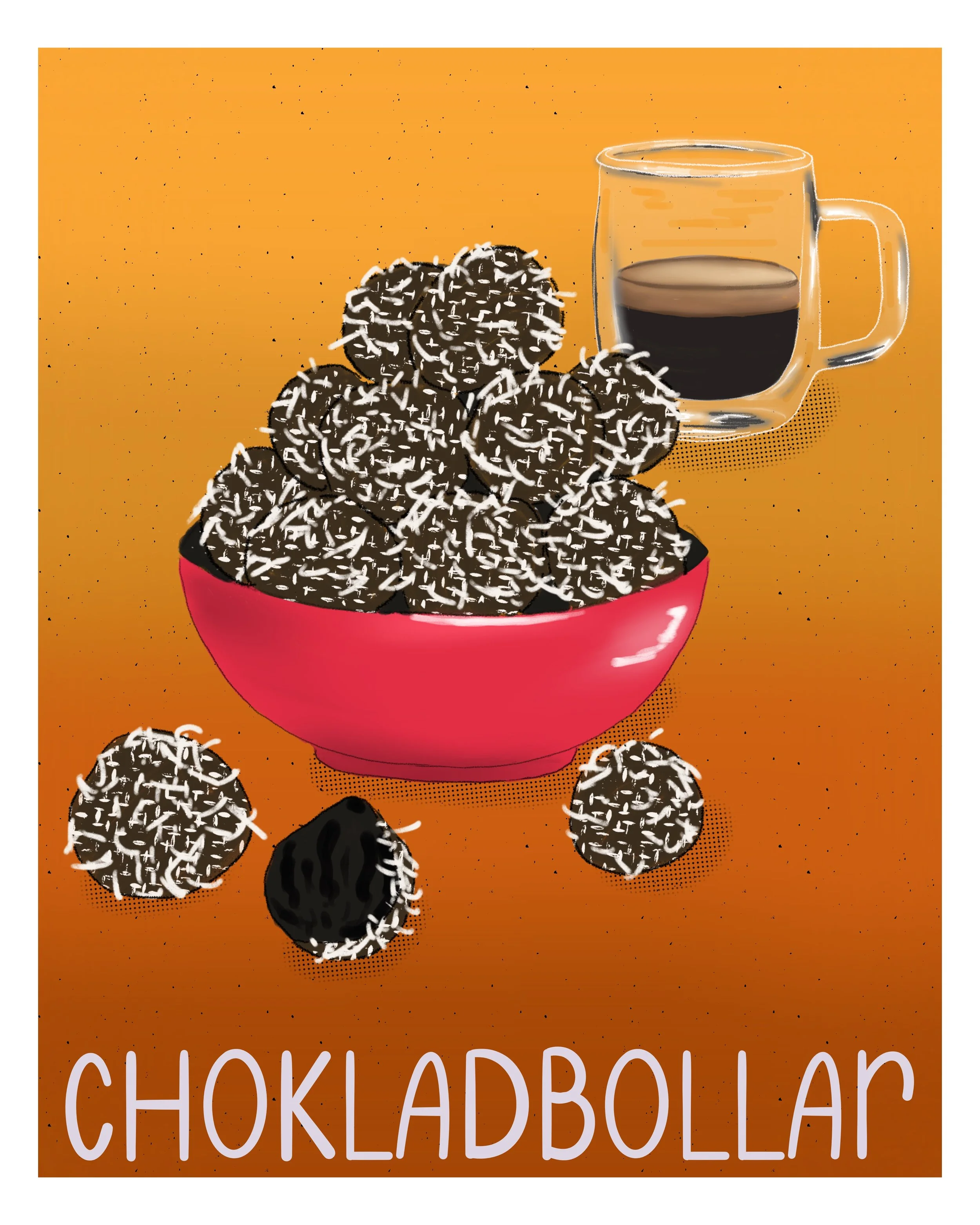
The chocolate ball is the great equalizer of Swedish fika culture. Every family has a recipe. Every recipe is slightly different. Every person is convinced theirs is the best.
They're made from oats, butter, cocoa, and sugar, rolled into balls and then coated in either coconut (the classic) or pearl sugar (the bold choice). No oven required. They're one of the first things Swedish kids learn to make, and they never stop being exactly right.
I drew this one with a big red bowl overflowing with them — because honestly, that's the only appropriate quantity — and an espresso in a glass mug. Orange background, because the contrast felt like joy.
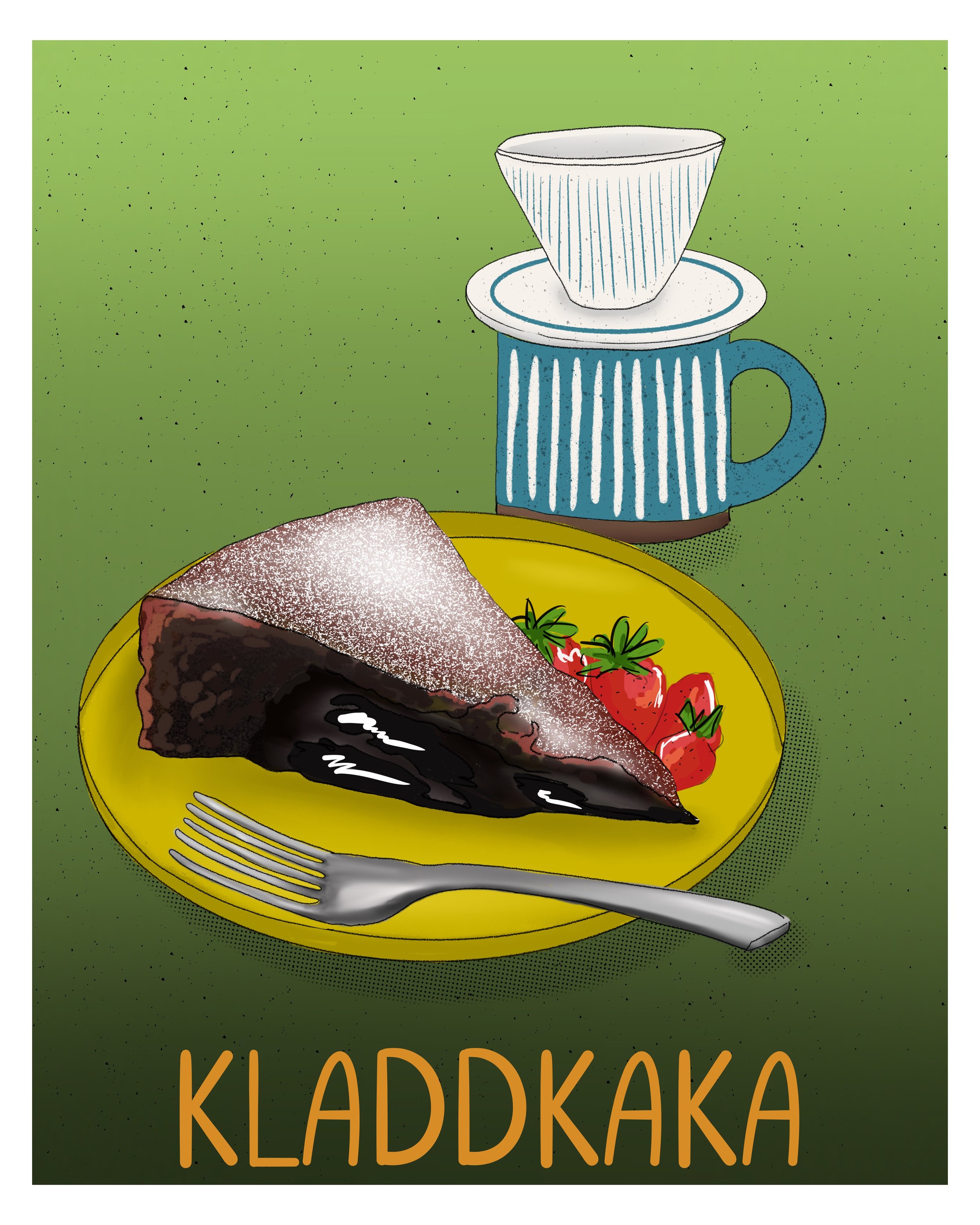
Kladdkaka — Sweden's Greatest Contribution to Chocolate
Kladdkaka translates, roughly, to sticky cake — and that undersells it completely. It's a Swedish flourless chocolate cake that's meant to be almost underbaked, fudgy in the center, dusted with powdered sugar, and served with strawberries or whipped cream.
It's the kind of thing that looks rustic and tastes like someone put real thought into it. Which is, not coincidentally, a very Swedish aesthetic.
For this illustration I put it on a yellow plate (because yellow against green is one of my favorite color combinations), added a beautifully Swedish-looking pour-over style mug, and leaned into the green background to make the whole thing feel a little earthy and grounded
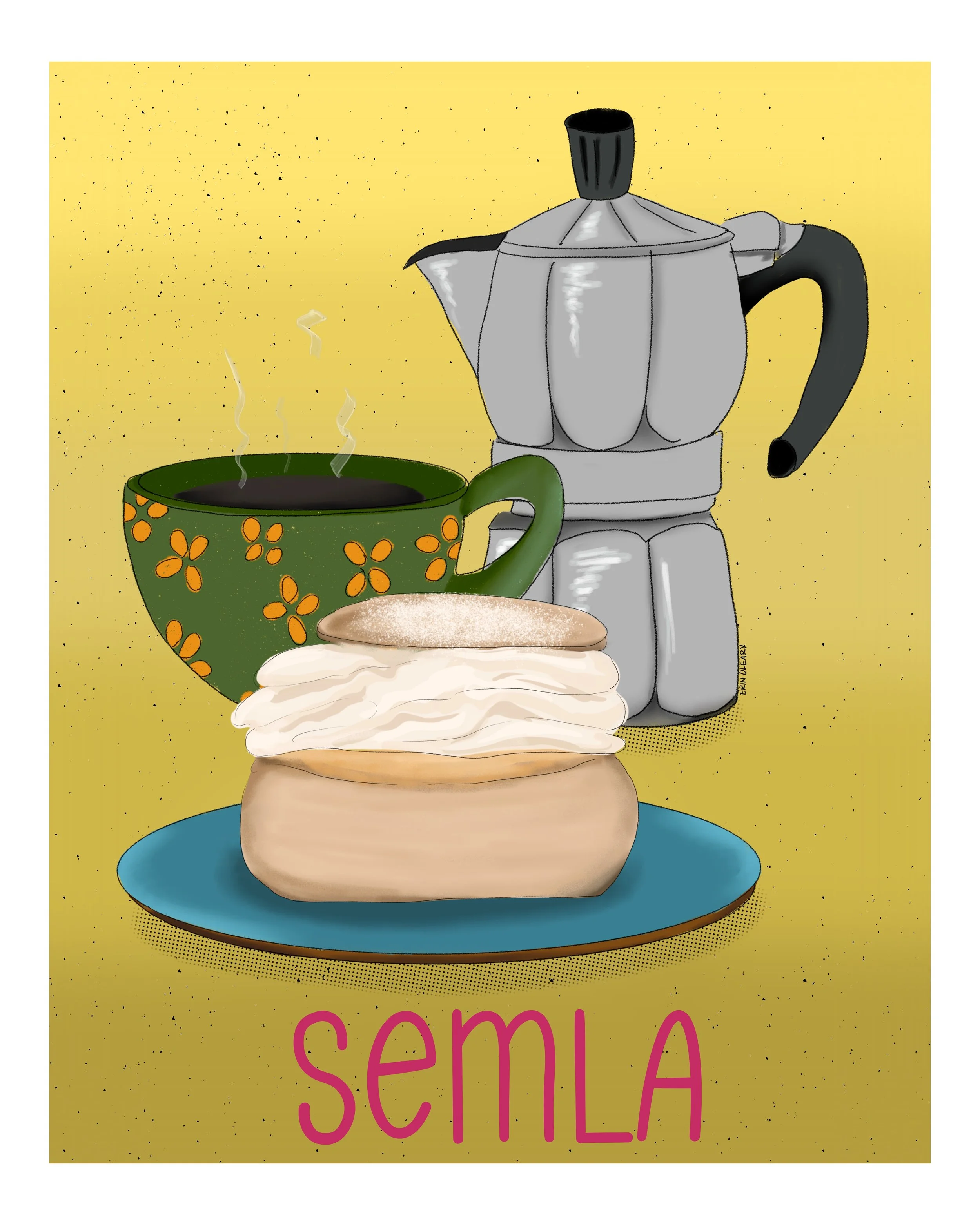
Semla — Seasonal, Dramatic, Worth It
The semla has a whole mythology around it. It's a cardamom bun filled with almond paste (if it’s roasted, even better!) and topped with a cloud of whipped cream, traditionally eaten on Shrove Tuesday — but Swedes start eating them in January and nobody seems bothered by this.
Every year the newspapers rank who has the best semla. My friends and I make a point of trying the top contenders. This year my favorite was from Deg (swedish for dough). Perfect balance of cardamom flavor and a roasted almond paste that oozed out from the bun! SO GOOD.
My semla illustration has that golden, sunlit feeling I associate with winter fika in Sweden — when it's cold and dark outside and the warmth of coffee and cream feels almost medicinal. The green floral mug was inspired by a vintage style my grandma had.
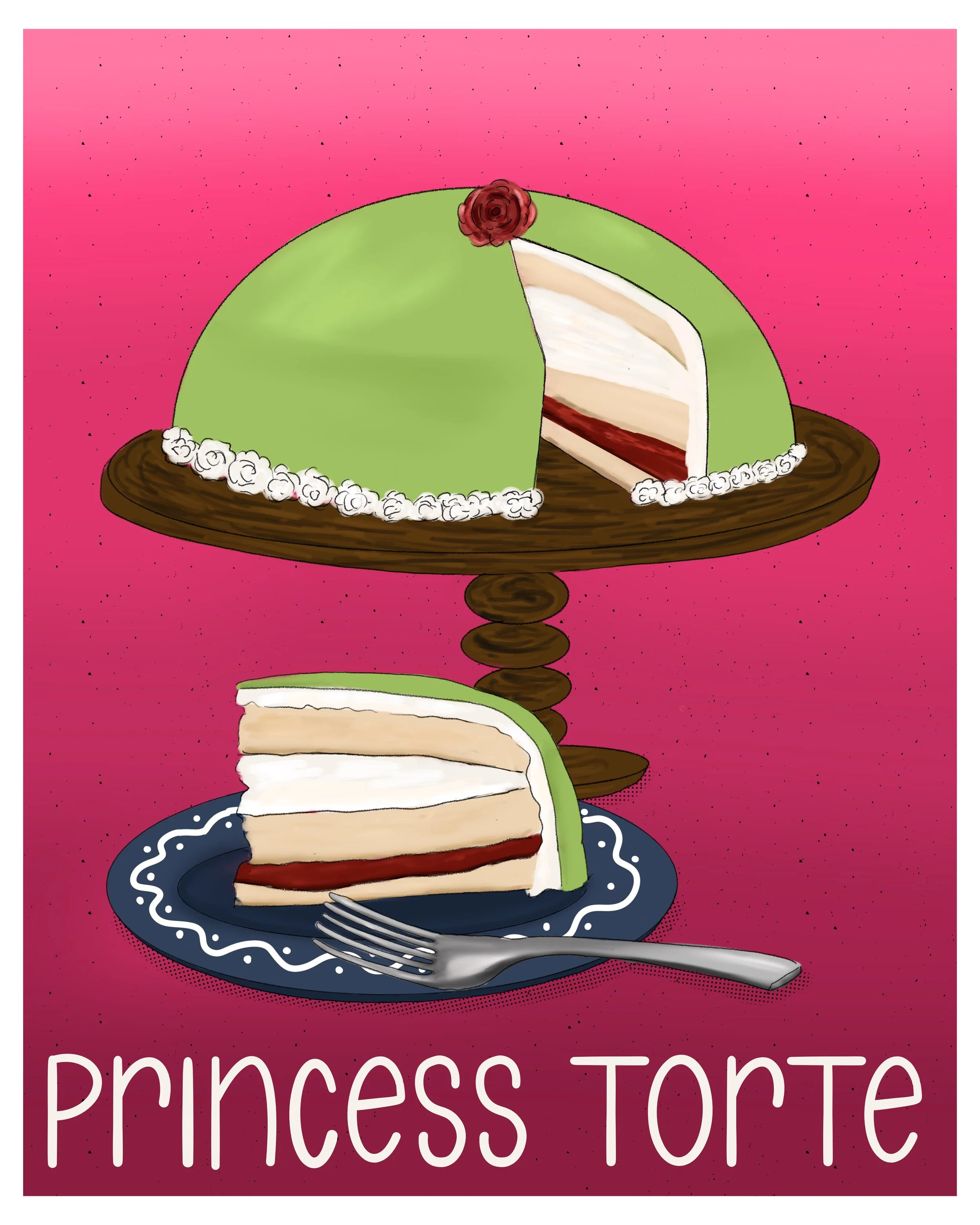
Princess Torte — The Showstopper
The princess torte is Sweden's most famous cake and one of its most beautiful. Layers of sponge, pastry cream, and raspberry jam, all wrapped in a smooth dome of pale green marzipan and topped with a single pink marzipan rose.
It's the cake you see in every konditori window. It's the cake at celebrations. It's the cake someone brings when they want to make an impression.
I illustrated it sliced open — because the cross-section is half the beauty — on a wooden cake stand, with a single slice plated below. Hot pink background, because the princess torte doesn't do subtle, and neither should its illustration.
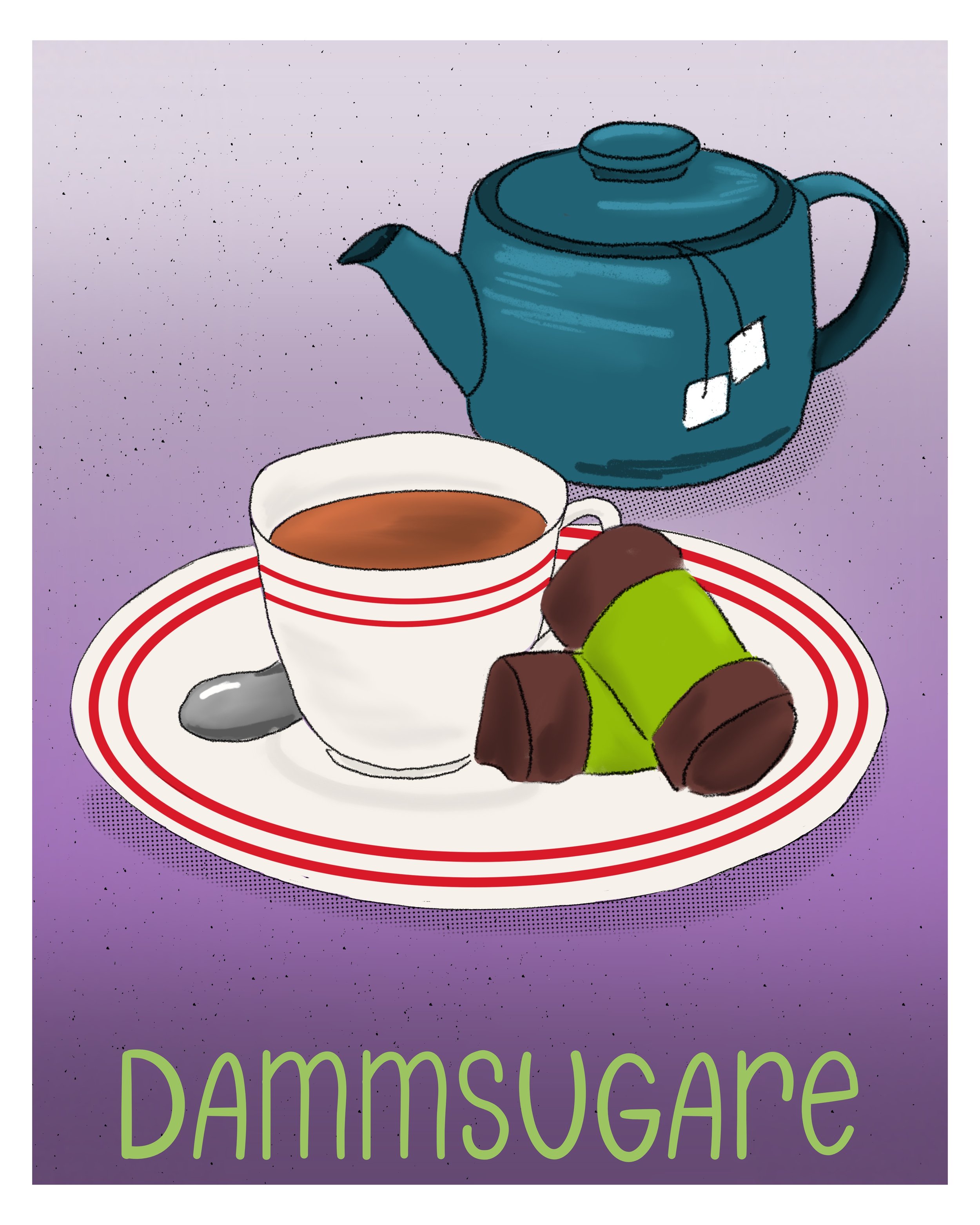
Dammsugare — The One with the Best Name
Dammsugare means vacuum cleaner. The pastry looks nothing like a vacuum cleaner. The name comes from a story — possibly apocryphal, definitely charming — that they were originally made from cake scraps swept up from bakery floors.
What they actually are: cylinders of marzipan and a chocolate-oat mixture, dipped in green marzipan on the outside and dark chocolate on the ends. They're sold at nearly every gas station and convenience store in Sweden, which either makes them lowbrow or perfectly democratic, depending on how you look at it.
I illustrated this one with a teal teapot and a classic striped cup — a gentler, more traditional fika setting to contrast with the slightly weird, delightful pastry.
The Pattern, the Tea Towel, and What Comes Next
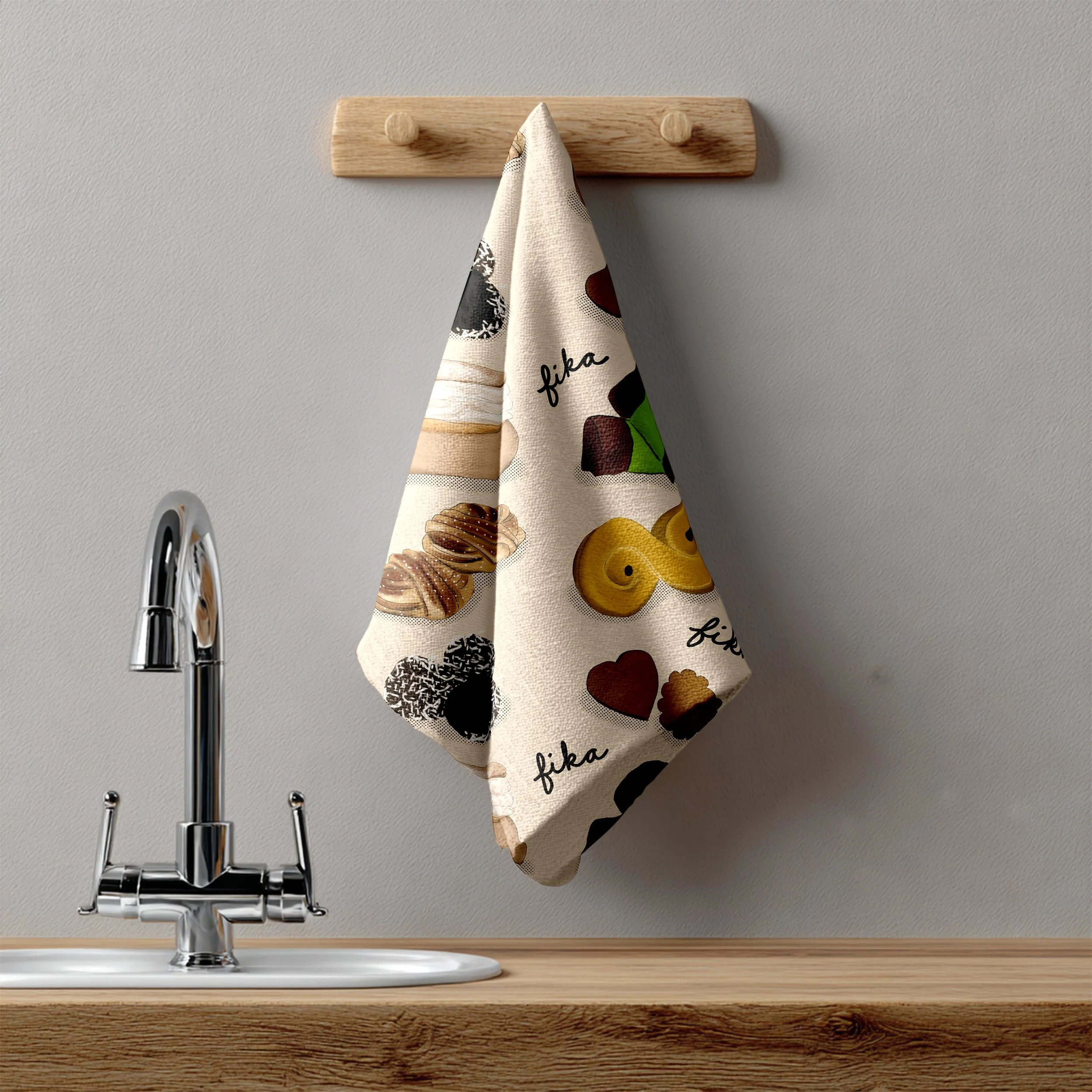
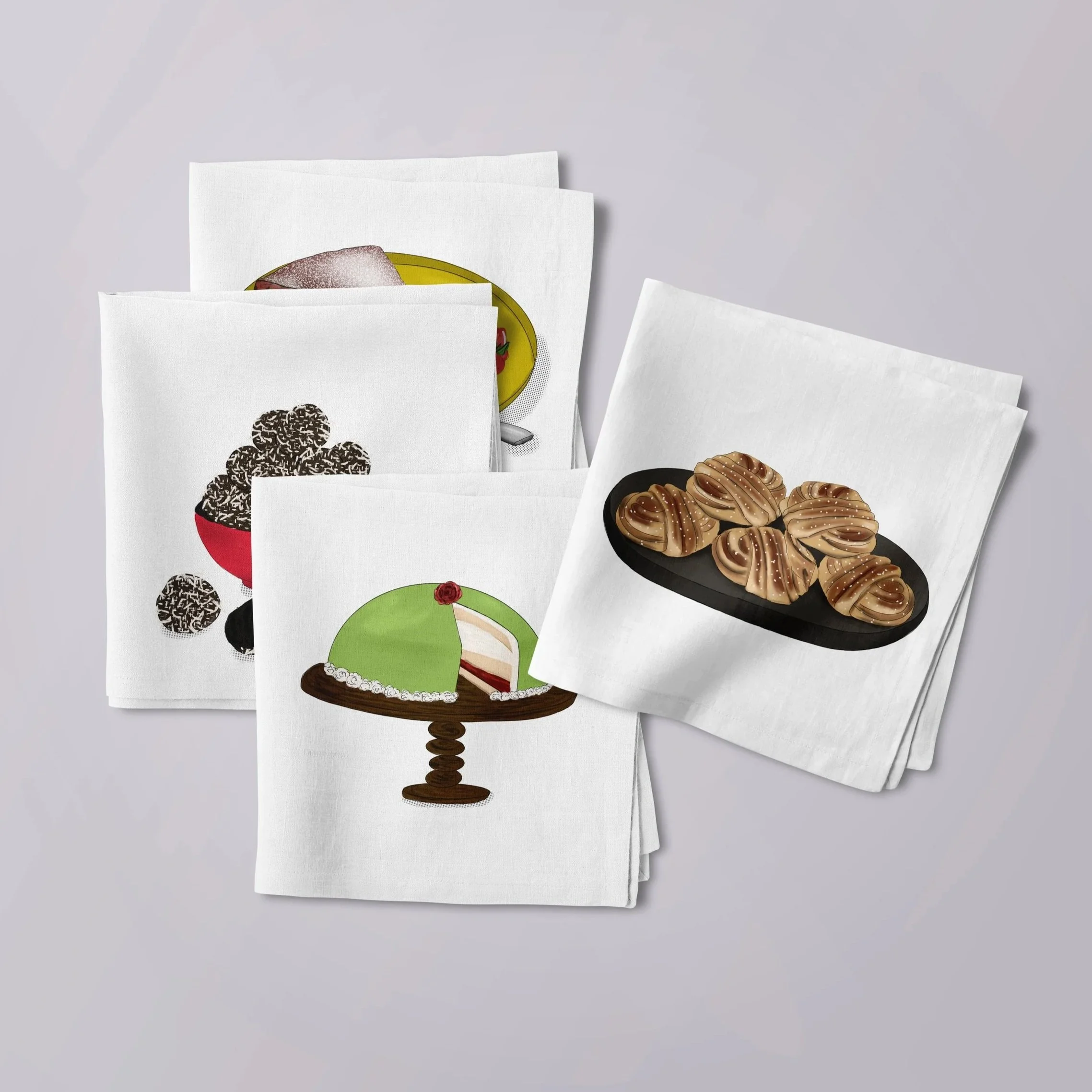
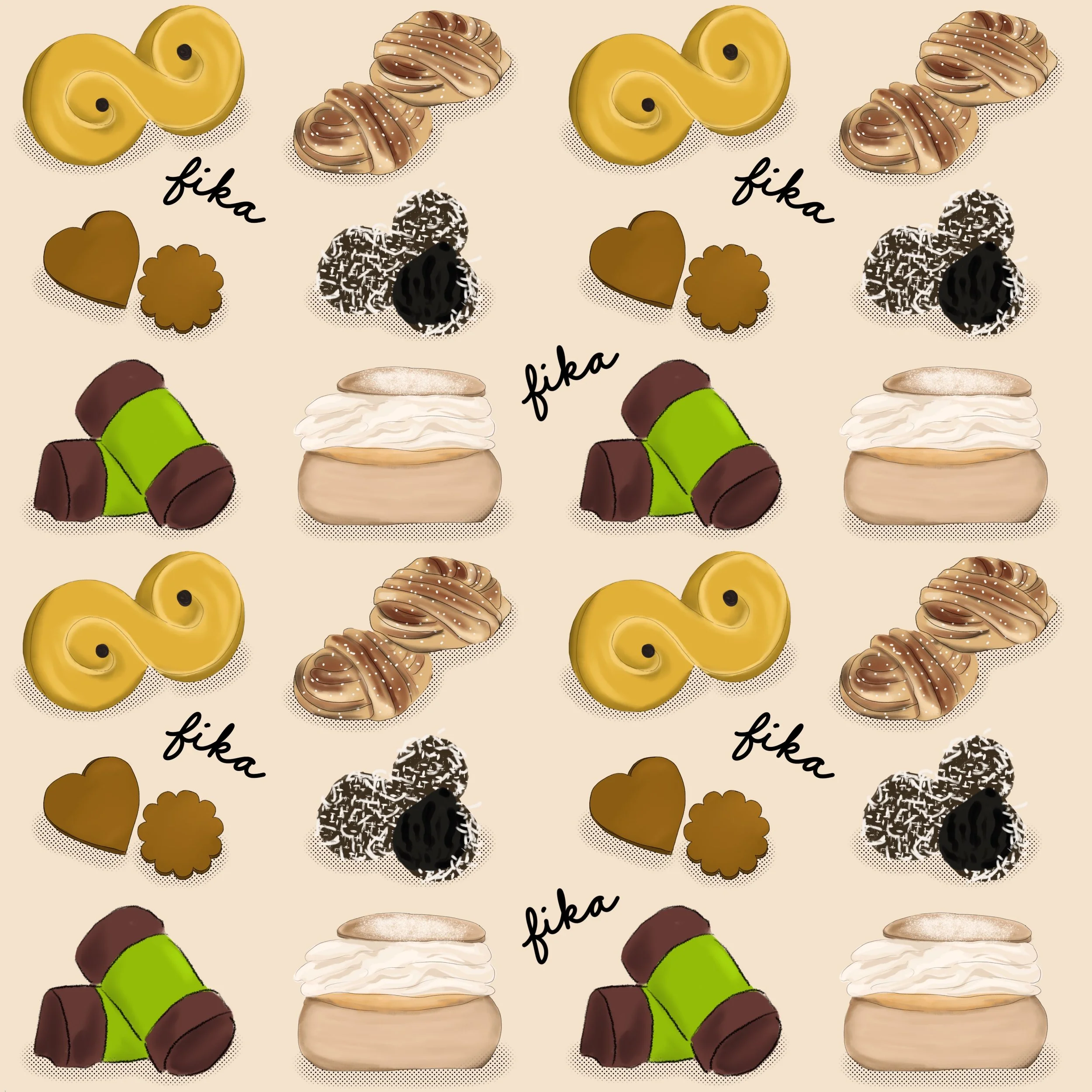
Once the individual prints were done, I wanted to see what happened when they all lived together — so I created a repeat pattern using all the pastry illustrations on a warm neutral background, with the word fika hand-lettered throughout.
The pattern found its way onto a tea towel mockup and a set of cocktail napkins, and I have to say: it works. The illustrations translate beautifully to textile, which makes sense — the flat, graphic quality of each piece was designed with versatility in mind.
This collection is currently a portfolio showcase, but if you're interested in prints, licensing, or working with me on something similar for your brand or project, I'd love to hear from you.
Why I Made This
The honest answer is I love fika. The pastries. The Coffee. The time with friends. It’s become something I look forward to regularly.
Having grown up in the US, we rush constantly. We’re always busy. Rest is something earned and only after finishing something grueling. Stopping in the middle of the day to sit with a friend and eat a cinnamon bun was an indulgence rather than a necessity.
Sweden disagrees with that, firmly and cheerfully. And after a few years here, so do I.
This collection was my way of sitting with that shift — of taking something I'd come to love about where I live and translating it into the language I know best. Every illustration in this series is a tiny argument for stopping, sitting down, and having a pastry.
I think that's a pretty good argument.
Want to Work Together?
If you have a project that could use this kind of illustrated storytelling — whether it's a food brand, a cultural concept, a product line, or something else entirely — I'd love to talk.
Reach me at erin@denimandink.com or through the contact page at denimandink.com.
Browse more of my work → Custom Portraits | Brand Flair Kits | Infographics
