
A Very Swedish Christmas: Glögg, Tomtes, and Whole Lot of Herring
Curious what Christmas looks like in Sweden? Picture candles glowing in every window, the smell of saffron and mulled wine in the air, and small gnome-like creatures (tomtes!) quietly watching over the household. After moving here over four years ago, I’ve learned that Swedish Christmas ( jul) is less about chaos and consumerism and more about cozy rituals, food, and tradition. And honestly, it’s magical.
Here’s a peek into what makes a Swedish Christmas so special. The flavors, the customs, and the slightly odd (but endearing) traditions that make me smile every Christmas season.
Glögg: Swedish Mulled Wine
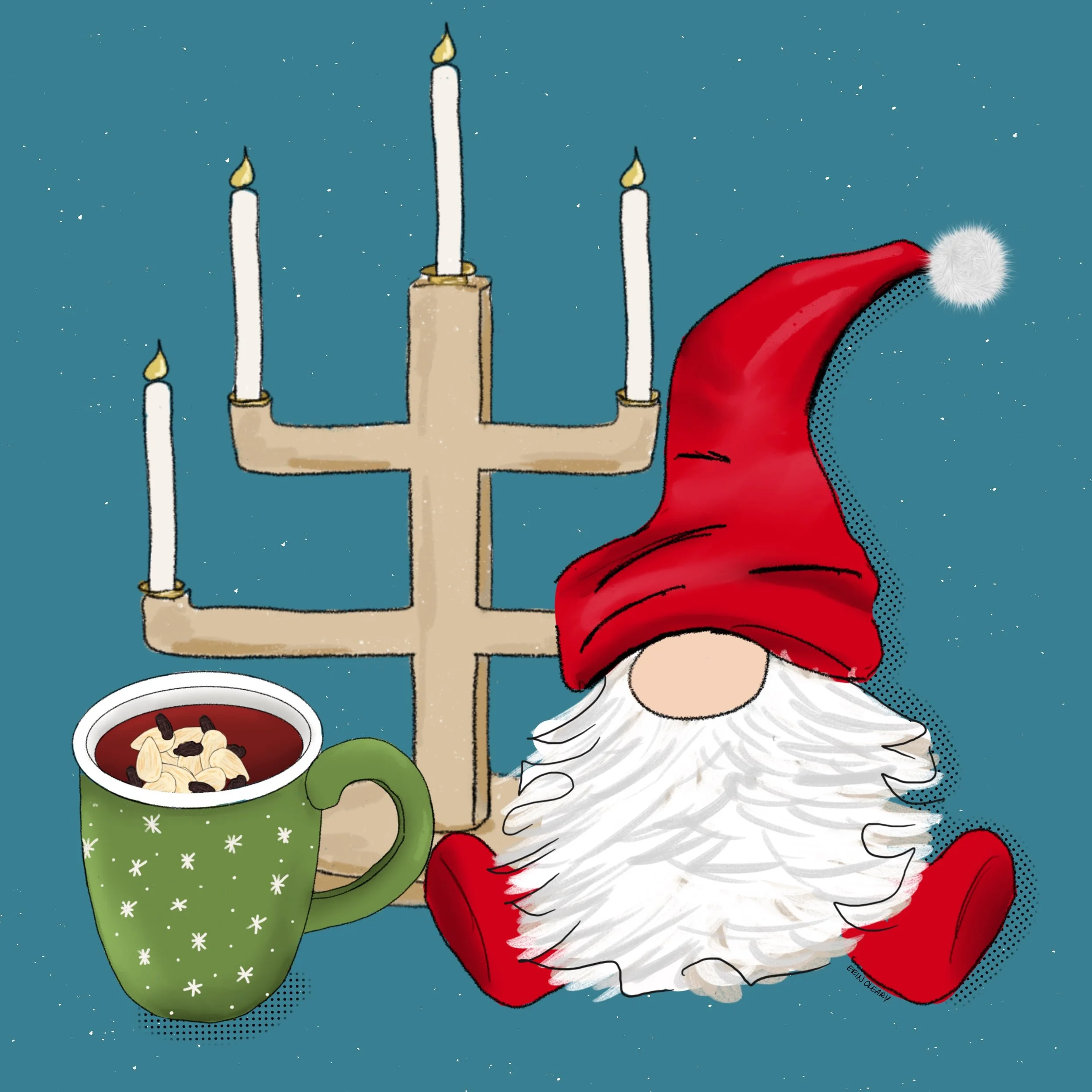
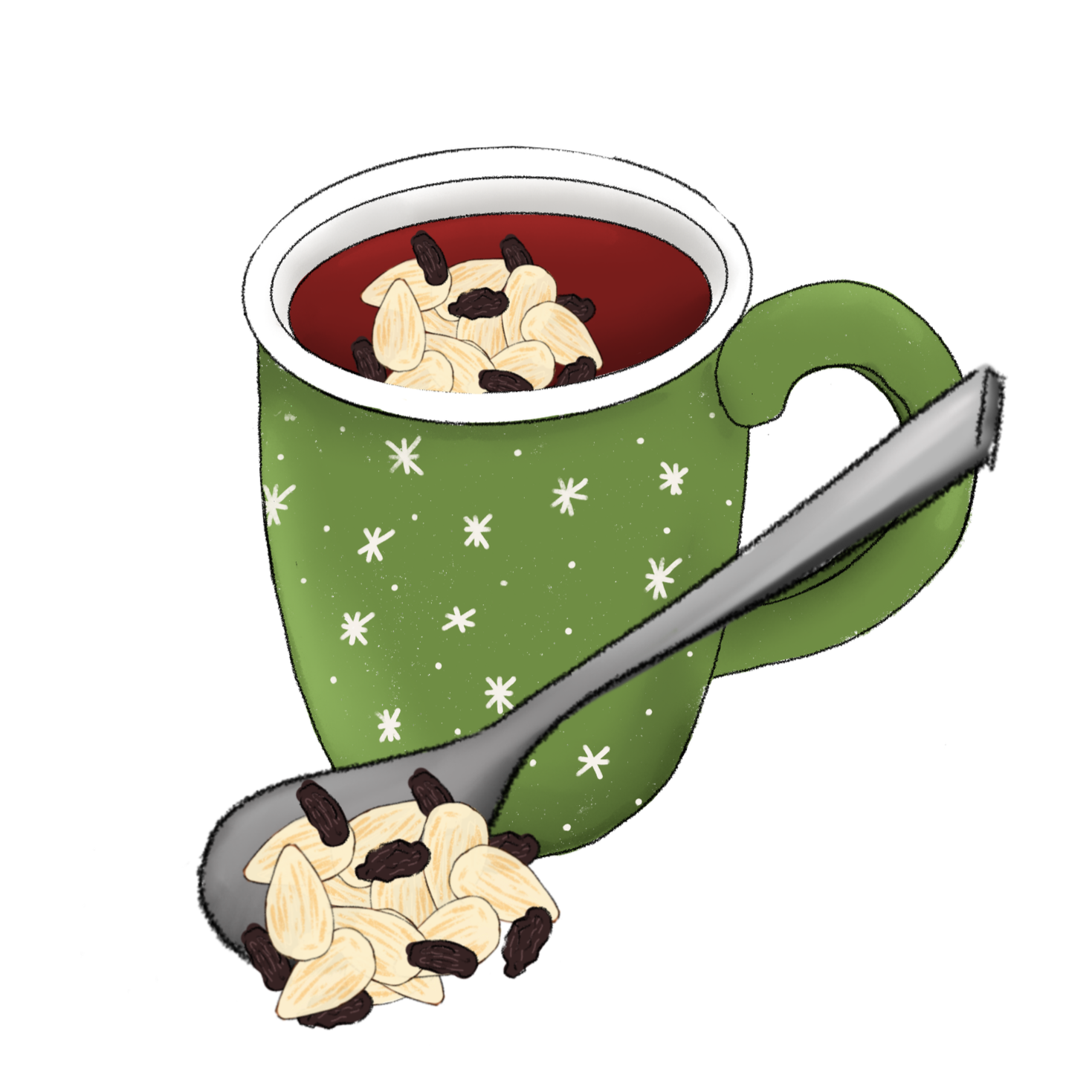
Let’s start with my personal favorite: glögg. Think of it as mulled wine’s Scandinavian cousin — spiced, warm, and always served with a few almonds and raisins floating in the glass. You can buy it everywhere this time of year, or you can make it yourself and fill your home with the smell of cloves, cinnamon, and holiday spirit. It’s the ultimate “welcome in from the cold” drink, and Swedes take it very seriously.
Pro tip: Each year Systembolaget (the Swedish liquor store) carries a glögg made specifically for that year. Always buy more than one so you can save one and in a few years you can do a sampling of the past few years as they are all different flavor profiles. Makes for a fun event!
Julmust: Christmas Soda
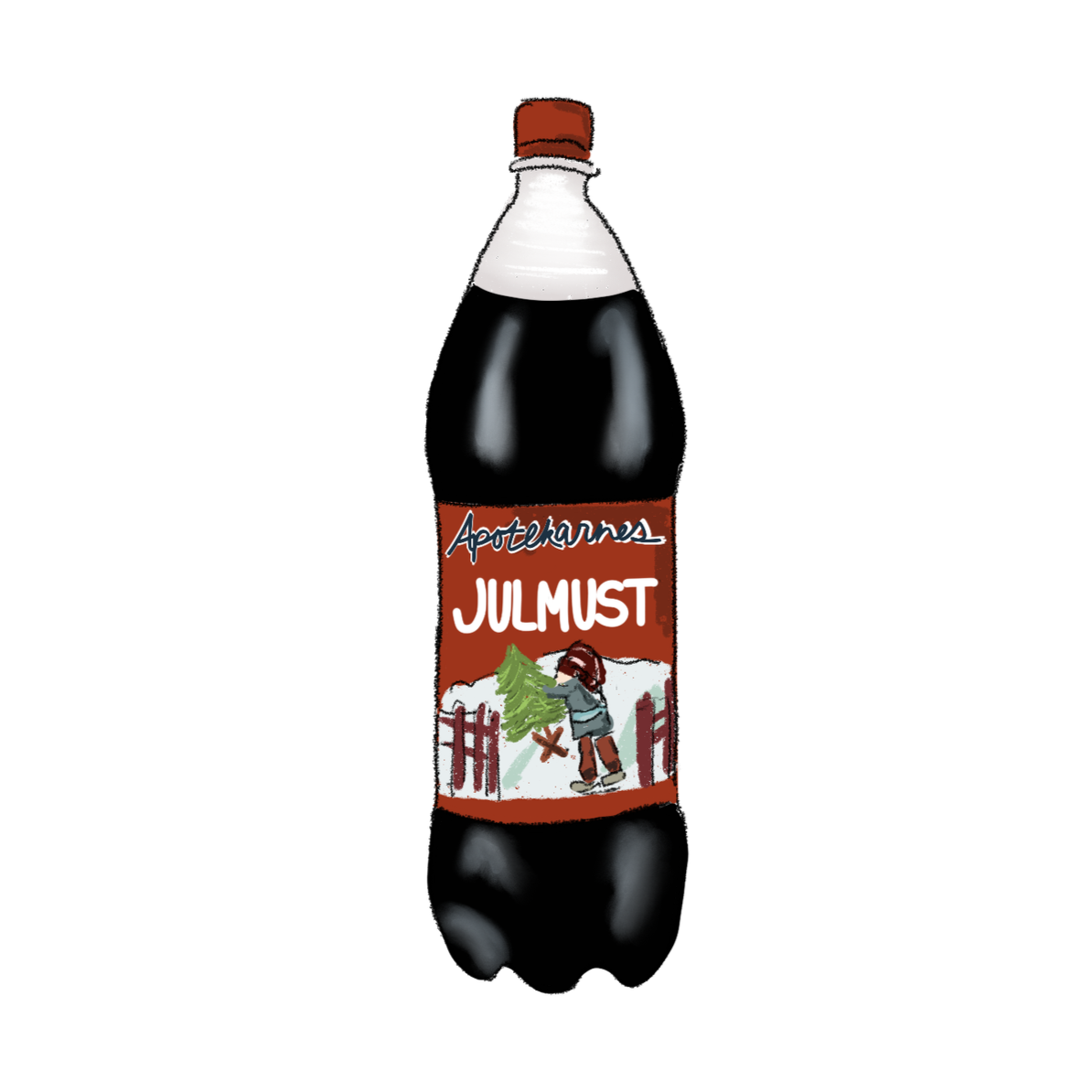
Julmust is a dark, sweet, lightly spiced soda that tastes like a cousin of root beer and cola who studied abroad and came back ~interesting.~ It was invented in the early 1900s as a non-alcoholic alternative to beer during the holidays… and it took off. Like, really took off. It’s only available around Christmas and Easter (which is the same soda but called Paskmust).
It’s the one beverage more popular than Coca-Cola in Sweden during December. The rumor is that Coca-Cola tried to compete with it here and lost miserably. Sweden: 1, Coke: 0.
You’ll see bottles of Julmust stacked everywhere from fancy cafés to 7-Eleven. Apotekarnes is the most popular, but like all good things, people have strong opinions won which is the best and there are many different versions from various makers. You can even find local breweries who make a holiday beer with this flavor! It’s weirdly addictive, and trust me, you’ll miss it in January.

Lussekatter: Saffron Buns
Ah, lussekatter — the golden, saffron-swirled buns you see everywhere around Lucia (December 13) and honestly all month long.
They’re shaped like little S’s (or infinity symbols), with a single raisin in each curl. The bright yellow color comes from saffron, and yes, saffron here is treated with the same level of reverence as Beyoncé tickets. It’s that serious.
The history ties back to ancient traditions: saffron was believed to ward off evil spirits during the darkest time of year. Now it’s just the taste of Swedish December — warm, soft, subtly sweet, and perfect with coffee.
It’s an acquired taste and if you’re not familiar with saffron, you will either like it or not. I enjoy them and always make sure to take part in this tradition.
Pro Tip: If you’re in Sweden, saffron is usually available in little packets from the cashier at the grocery store. It took me a few visits to figure this out when I couldn’t locate it in the spice aisle. But, sometimes at the beginning of the season you can find a big bin full of the packets right usually near the store entrance - it’s that popular!
Lucia: The Festival of Light
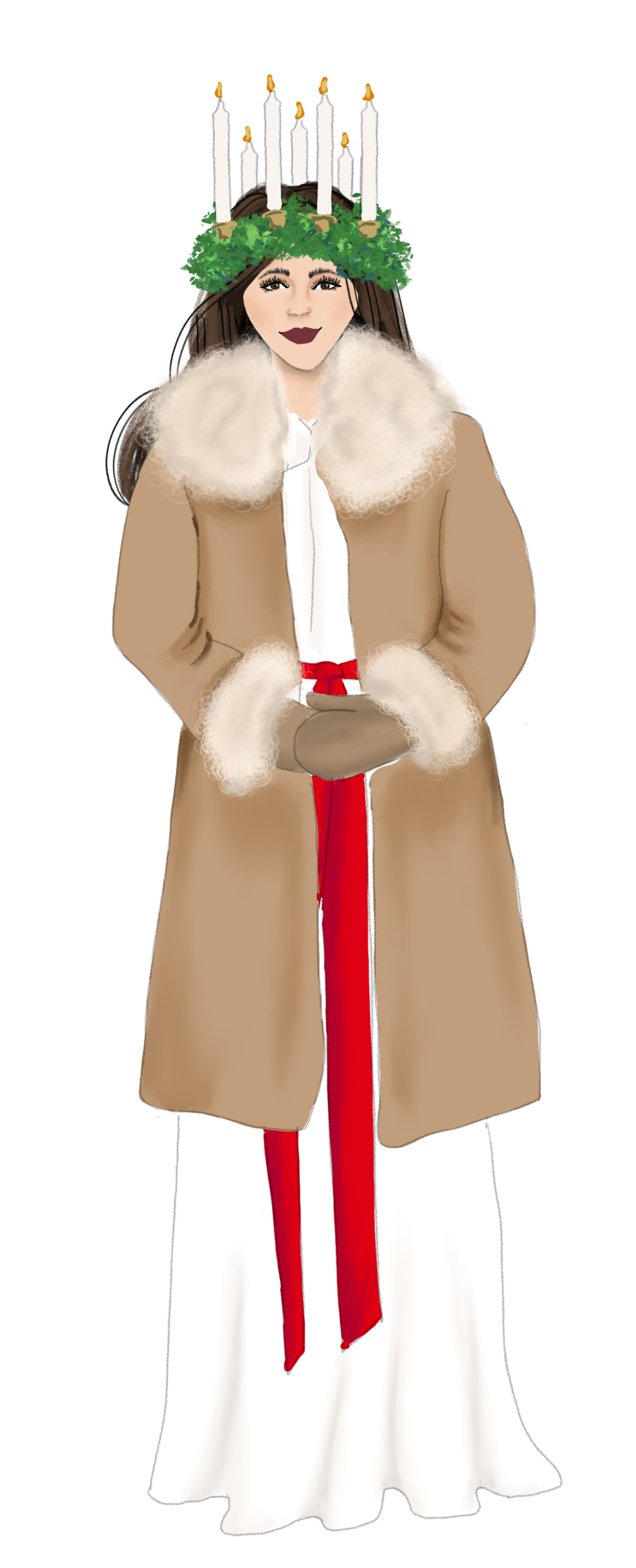
December 13 is Luciadagen or Lucia, The Fesitval of Light. It’s based on Santa Lucia (Saint Lucy) who was known for bringing food to Christians hiding from persecution in the catacombs. Lucia arrived in Sweden sometime in the Middle Ages. The legend states that she wore a wreath of candles on her head so she could carry supplies in her hands and see through the dark. Over time the religious aspect merged with the winter solstice celebrations, aligning it with welcoming the light in the dark days.
On Lucia day, there are processions of children singing classic Lucia songs, dressed in all white and holding candles all over the country at schools, concert halls, city squares, offices, and TV.
It’s a celebration of light, community, warmth, tradition, and slowing down. It truly is one of the most beloved traditions during the season.
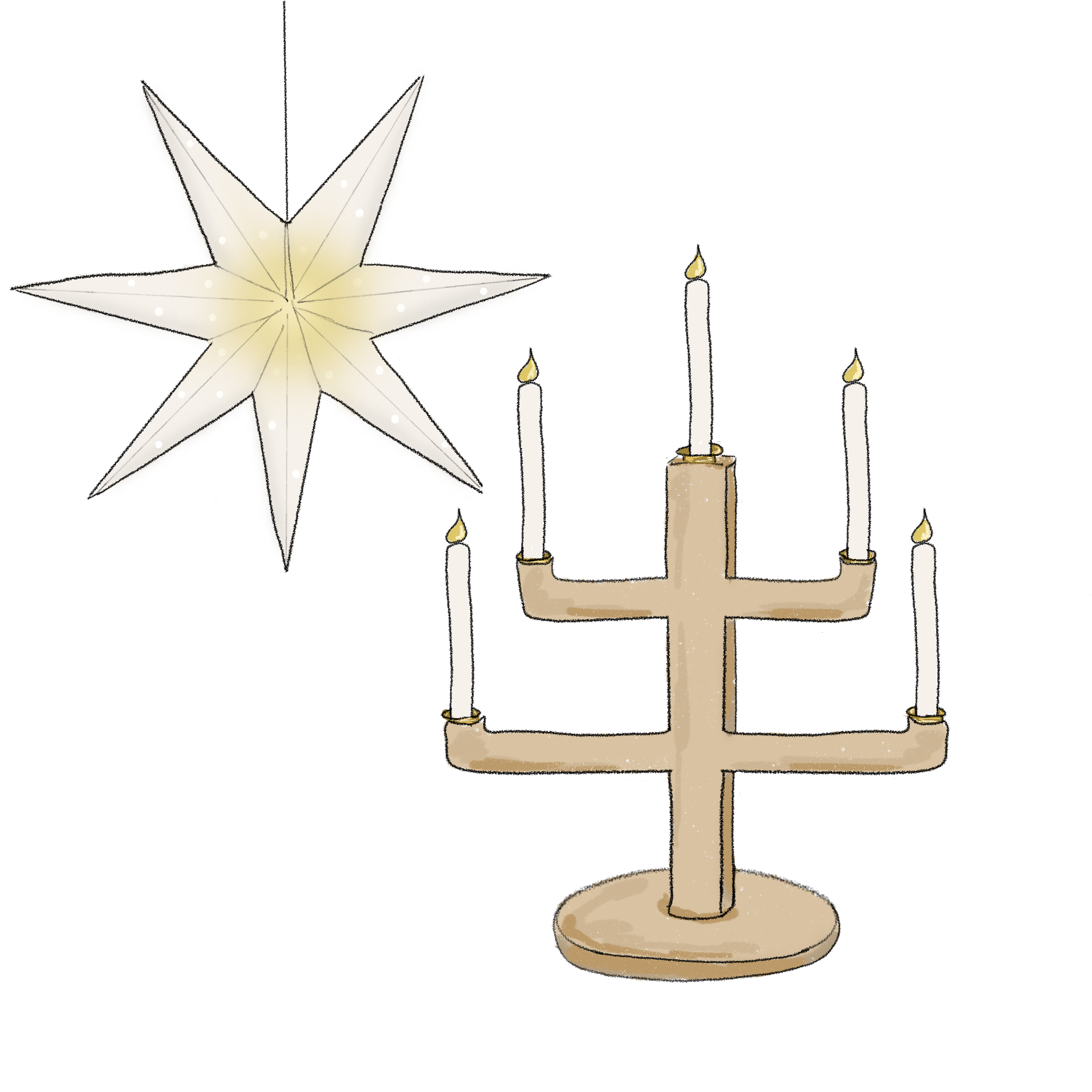
Advent Candles & Paper Stars
Swedes take window lighting to another level and I am 100% here for it! Every window glows with either a paper star or a candle holder. This is the kind of minimal, effortless glow that makes Swedish design so good.
The tradition started in Germany in the 1800s and made its way to Sweden, where it stuck harder than any string of twinkle lights ever could. Today, the stars come in all shapes: classic white, lacy patterns, deep colors, metallic finishes.
I swear the whole country looks instantly more magical when the stars go up — especially when the sun sets at 3 p.m. (which is always). It’s a warm, glowy reminder that there is light, even in the darkest month. Unlike most Swedes who wait until the start of advent to put up their stars, mine are already up and lit. I mean it’s DARK right now and I need that bit of joy to make it through the season!
Julbord: The Christmas Buffet
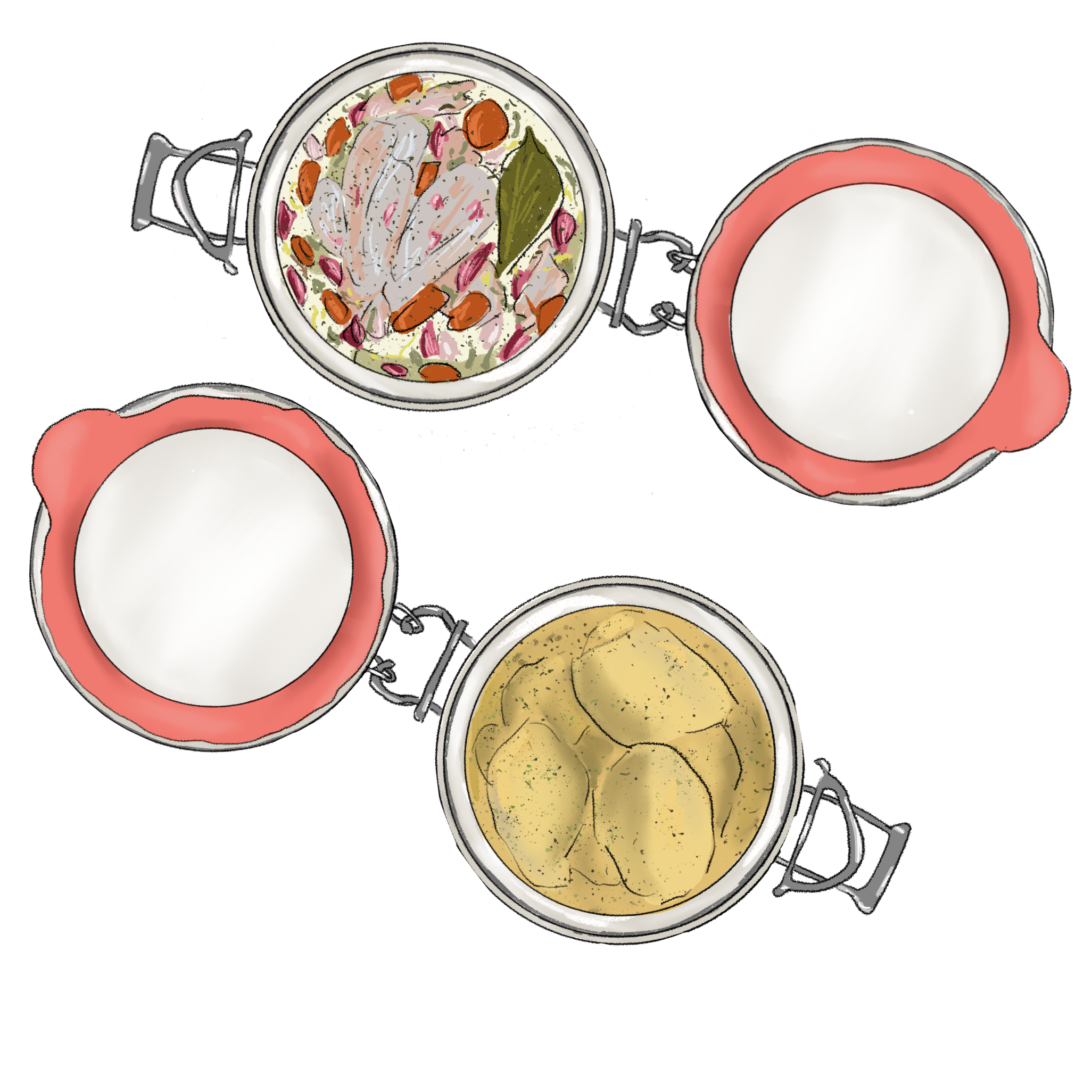
If you love a good buffet, welcome to your Christmas version. The julbord is the centerpiece of Swedish Christmas. A spread that could feed a small village. During the holidays, you will find a julbord offering at most restaurants. Everyone puts a bit of their own spin on it, but the traditional julbord includes (in strict order, I might add!):
The Herring Course
Every flavor you can imagine: mustard (my personal favorite), onion, curry, dill, lingonberry… herring is the Beyoncé of the Julbord. You will eat it. Even if you swear you won’t. (Ask me how I know.)The Cold Fish Course
Gravlax, smoked salmon, shrimp, sauces galore.Cold Cuts
Christmas ham (julskinka), pâtés, sausages, cured meats.Warm Dishes
Meatballs, prinskorv (tiny sausages), Jansson’s Temptation (potatoes + cream + anchovies = trust the process), red cabbage, and more.Cheeses + Bread
Because at this point, why not?Desserts
Risgrynsgröt (rice pudding), cookies, chocolates, saffron buns… the whole shebang.
It’s less of a meal and more of a multi-hour event where you question all your life choices…and then go back for another round of meatballs. It’s a tradition of bringing everyone together to celebrate.
Donald Duck at 3 p.m.
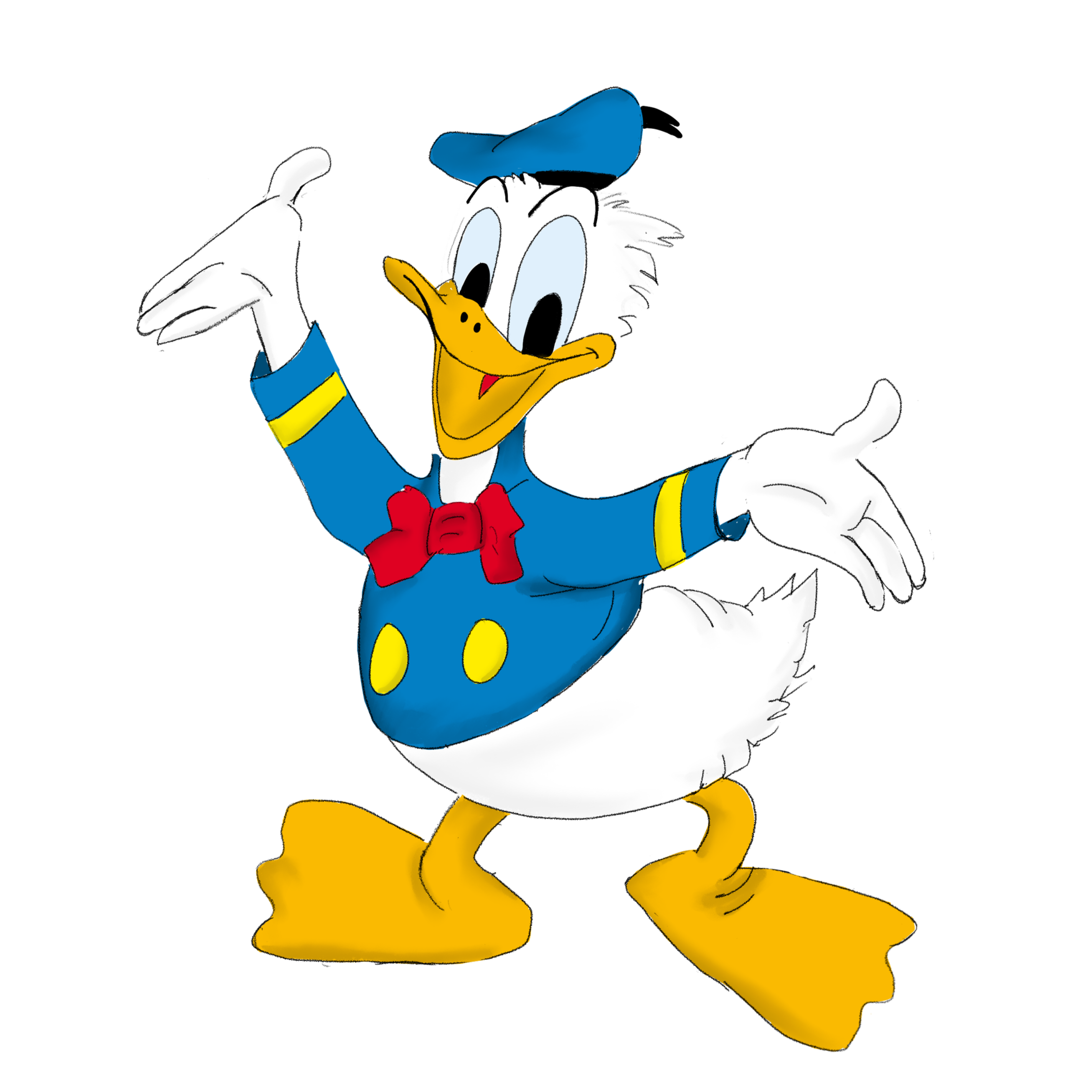
Okay, I know this one sounds a little wild if you’re not from Sweden. Every Christmas Eve at 3:00 p.m., the entire country stops what they’re doing to watch Donald Duck.
Yes. Donald Duck. Yes. Every year. And Yes, It’s as iconic as the tree, the presents, and the glögg.
The official name is Kalle Anka och hans vänner önskar God Jul (“Donald Duck and His Friends Wish You a Merry Christmas”), and SVT airs the exact same compilation every single December 24th.I’ve read they tried to mix it up with different versions over the years and no one was having it, so it’s stayed the same every year.
The tradition dates back to the 1960s, when Sweden only had one TV channel. Disney cartoons were rare and a big deal — so the Christmas broadcast became a national event. And the tradition never died. If anything, it’s more beloved than ever.
Families gather around the TV like it’s 1967. You can walk past apartment windows at 3 p.m. on Christmas Eve and literally see Donald Duck on TV in every single one of them.
It’s the communal pause, the nostalgia, and honestly… the adorable absurdity of it that makes Kalle Anka feel so special.

Tomtes: Swedish Christmas Gnomes
If Santa Claus and a garden gnome had a Nordic baby, you’d get a tomte. And they are the absolute cutest things (IMO). I may have started quite the collection of them since moving here, and it grows every year.
Historically, the tomte was a household guardian, a tiny caretaker spirit. People believed he lived in the barn or under the floorboards, looking after the animals and protecting the family, as long as you treated him well. If you didn’t, he was known to cause mischief. A petty king. Respect.
On Christmas Eve, you were supposed to leave him a bowl of risgrynsgröt (rice porridge) with a pat of butter on top as a thank-you gift for keeping your household safe all year. Skip the butter and, well… good luck.
They’re like the unofficial mascots of Swedish Christmas. They’re cozy, cute, and absolutely everywhere.
Why It’s So Special
Swedish Christmas isn’t about grand gestures. It’s about light in the dark, warmth in the cold, and taking time to slow down. It’s sharing glögg with friends, lighting another advent candle, and quietly enjoying that first saffron bun of the season.
It’s simple. It’s intentional. And it’s my favorite time of year here.
