
Hosting Your Own Cocktail Class
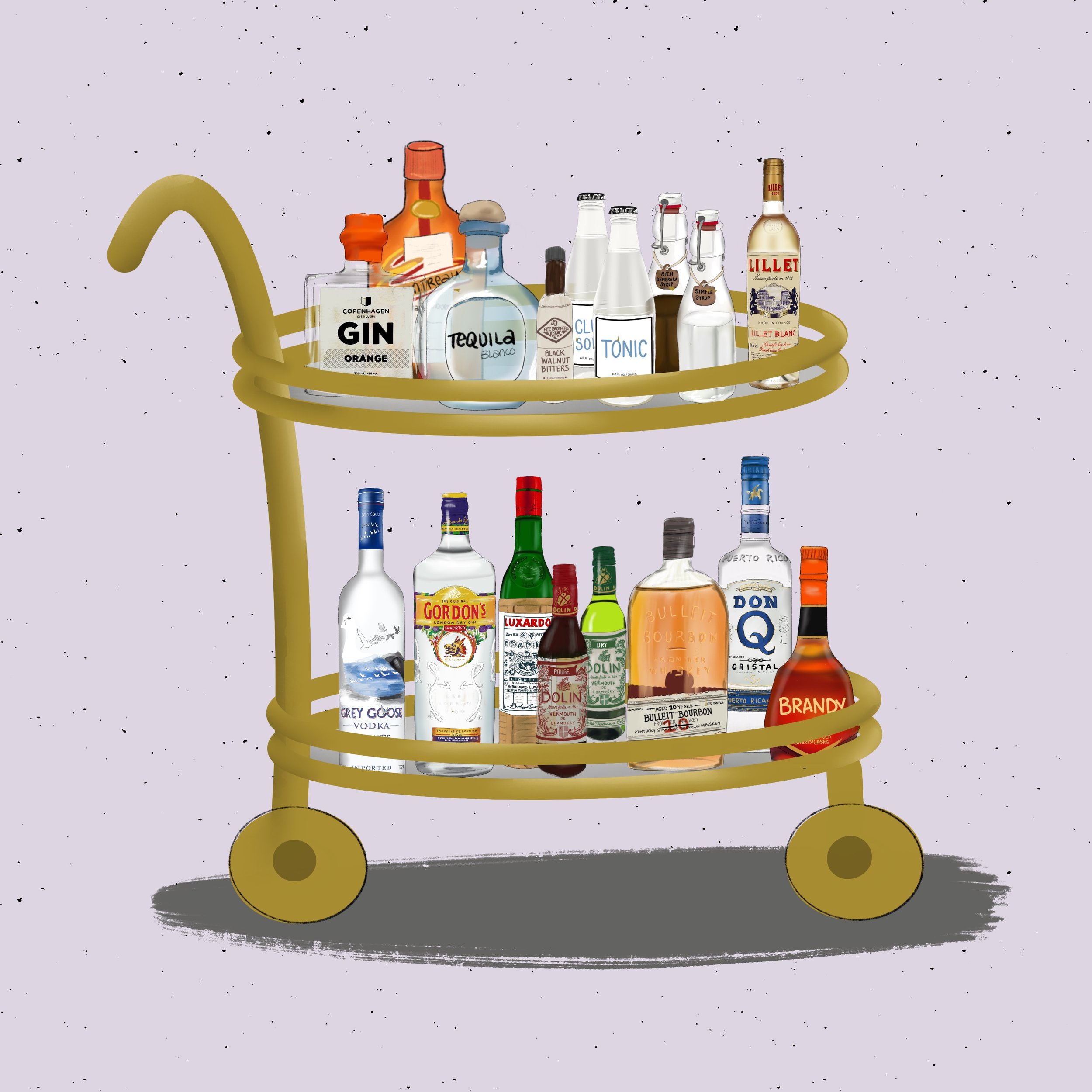
How to Host Your Own Cocktail Class
Cocktail nights are always a good time—but making it an experience by showing your friends how to make the drinks and understand why they taste good? That takes it to another level. That was the idea behind a little gathering Ramesh and I hosted recently: a DIY cocktail class for friends, complete with taste tests, illustrated worksheets, and (let’s be honest) a charcuterie spread large enough to qualify as dinner.
If you're looking for a creative way to gather friends, sip something fabulous, and learn a few bartender secrets, here’s how we pulled it off—with some illustrated flair, of course.
Start With the Basics: Taste + Balance
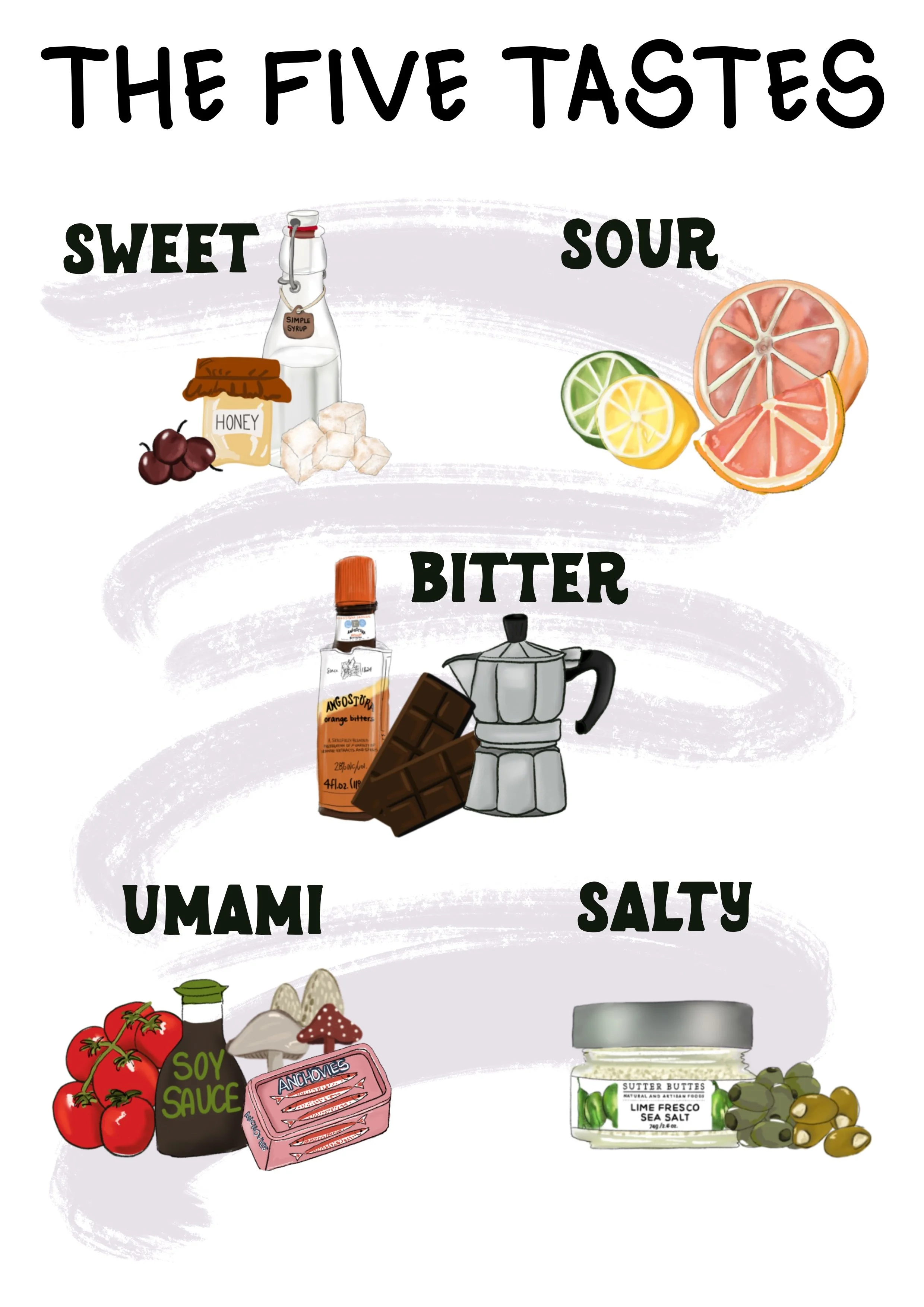
Before we even picked up a shaker, we kicked things off by talking about the five core tastes:
🍯 Sweet - smooths out acidity or bitterness
🍋 Sour - adds brightness and zing
☕️ Bitter - brings complexity and depth
🫒 Salty - enhances flavors and rounds out rough edges
🍄 Umami - the mysterious one!
Each of these flavors plays a role in how a cocktail comes together. This overview helped everyone understand why certain ingredients work together—and gave people a totally new way to taste their drinks.
⭐️ Pro Tip: create a jar or plate of each taste that includes a few samples of that taste
✨ Illustrated taste sheet
Next Up: The Cocktail Trinity – Base, Modifier, Accent
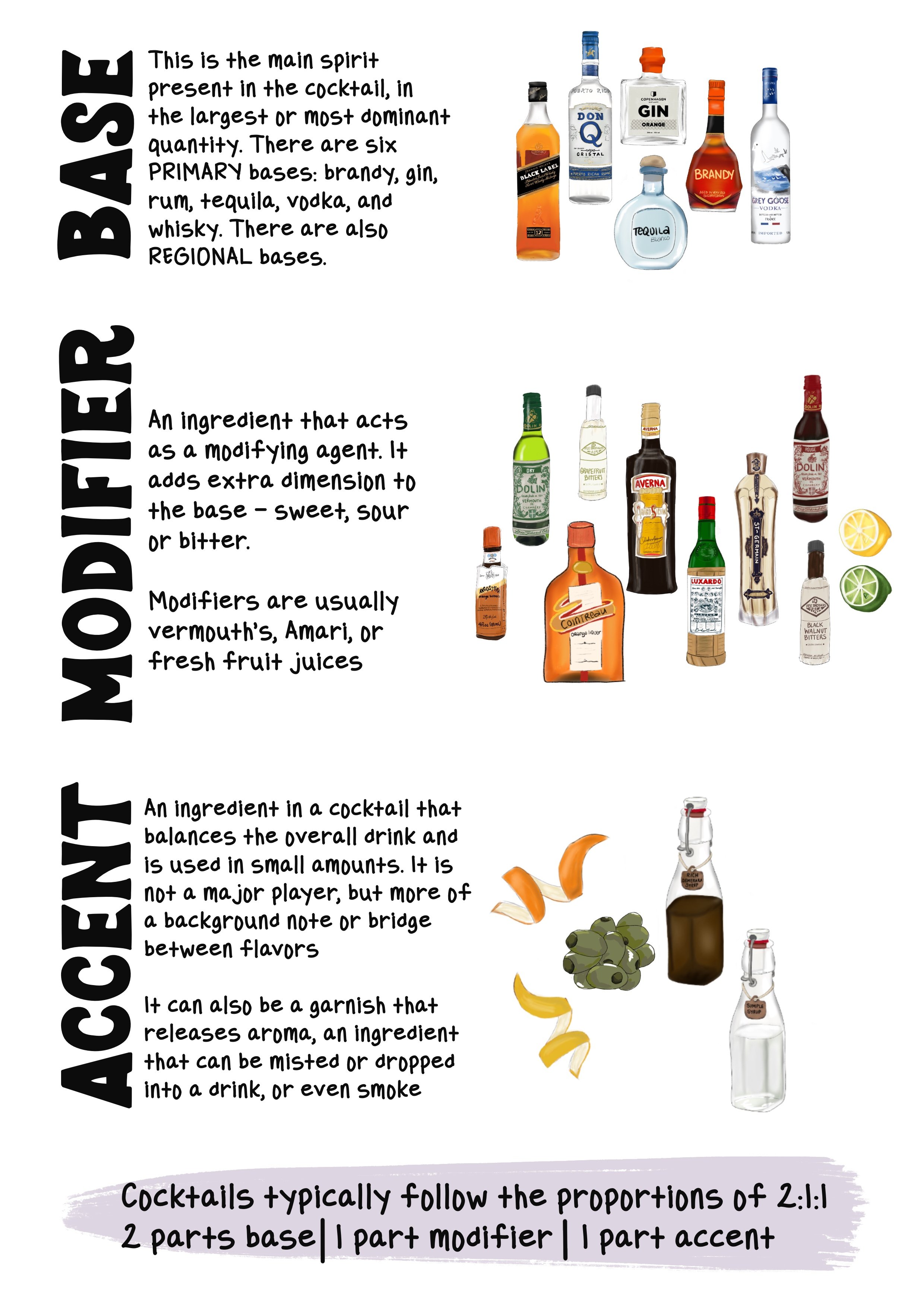
With our palates prepped, we moved on to the structure of a cocktail. Every drink is made of three main parts:
Base – the primary spirit (gin, vodka, rum, tequila, etc.)
Modifier – something that stretches or balances the base (vermouths, citrus juice, liqueurs)
Accent – small but mighty: bitters, syrups, garnishes, or even a twist of citrus oil
Most cocktails follow the 2:1:1 ratio - 2 parts base, 1 part each modifier and accent. Once you understand this, you can build (or tweak) your own drinks with confidence.
To make it easier to understand, I created a little illustrated guide sheet (because of course I did) showing examples of a base, modifier, and accent. Sometimes identifying what is what can be tricky.
✨ Illustrated Components
Let the Mixing Begin: 5 Cocktails to Practice On
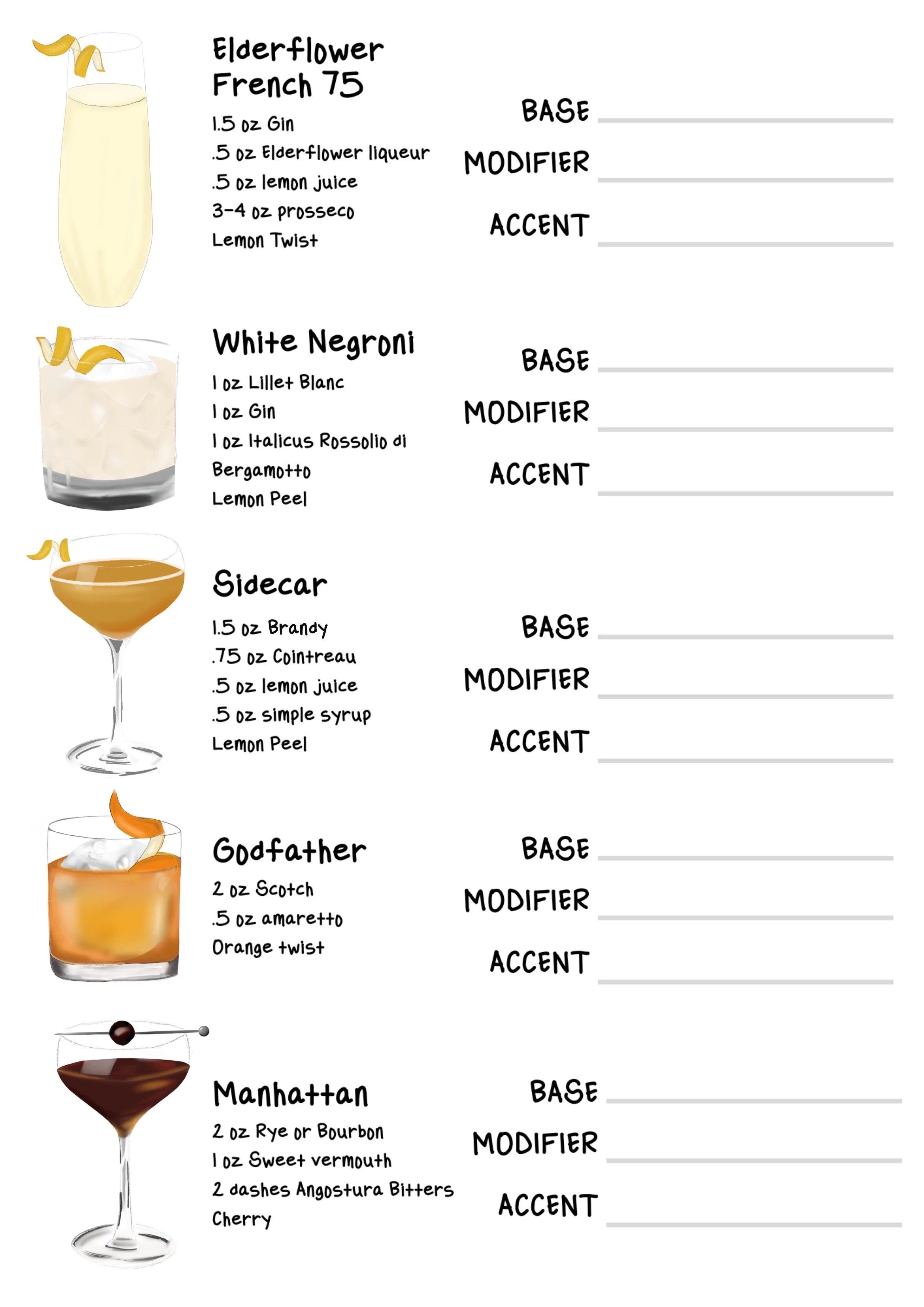
After the basics, we rolled up our sleeves and made five cocktails that showcased different flavor profiles and styles:
Elderflower French 75
White Negroni
Sidecar
Godfather
Manhattan
Each one was chosen to highlight a different spirit and structure. To make it extra fun, I created a worksheet where everyone had to identify the base, modifier, and accent in each drink. It turned into a mini competition—and yes, I even had a prize for the most correct. The prize was the winners choice of any cocktail print from my collection.
✨ Cocktail worksheet
Don’t Forget the Food: A Charcuterie Spread Worthy of the Cocktails
If you're going to drink five cocktails in one night, you better have snacks. We went big. Think overflowing boards with cheeses, cured meats, dips, crackers, olives, fruit… basically, if it pairs well with a drink, it made it onto the table. Don’t overthink this. You really can’t go wrong with how you assemble, just make sure you have enough for everyone to enjoy. You can find some of my favorite snack board ideas here. We asked everyone to bring components for the spread. This also helped ease up on all the prep for the night as well as ensures everyone has something they really love on the board.
It also gave everyone a chance to pause between drinks, rehydrate with water, and snack on cheese (a very important step).

Why You Should Totally Host One Too
This night was the perfect mix of social and educational—guests left with new go-to cocktail recipes, a better understanding of flavor, and let’s be honest, a solid buzz. Hosting your own cocktail class doesn’t require a mixology degree. Just plan a few recipes, give your guests some structure, and let the fun happen. Bonus points for using my worksheets or including custom illustrations (I might know someone who can help with that 😉).
You can find all the worksheets used for this event on my freebies page.
